
1.

Answer : C
Solution
Distance between the adjacent wave crests is the wavelength = 24 m
In 1 s he travels 1.6 m.
In I hour or 3600 s, he will travel = d = 1.6 x 3600 m = 5760 m.
Number of wave crests he goes through = n = 5760/ 24 = 240.
He surfs every 30th wave crest, so he will surf 240/ 30 = 8 wave crests in one hour.
2.
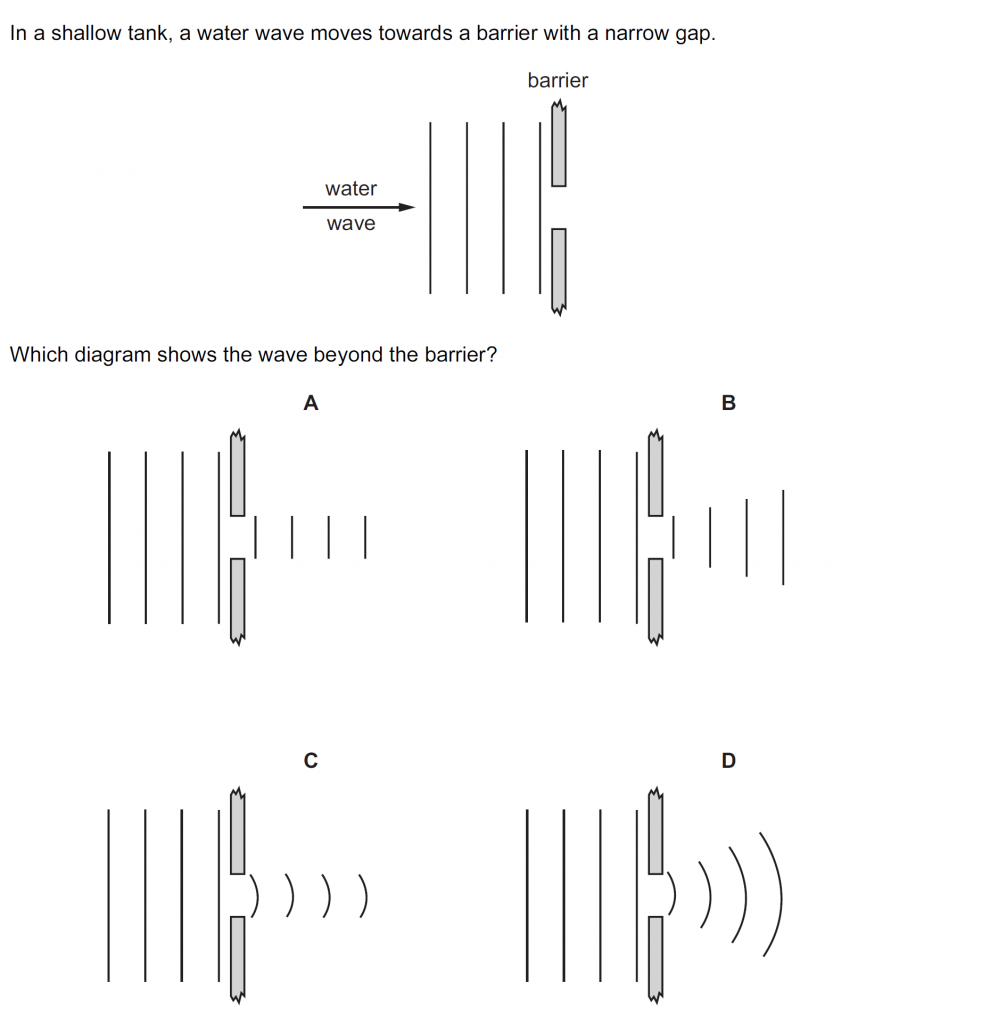
Answer : D
Solution
Narrow gap, so pronounced diffraction. So, D.
3.
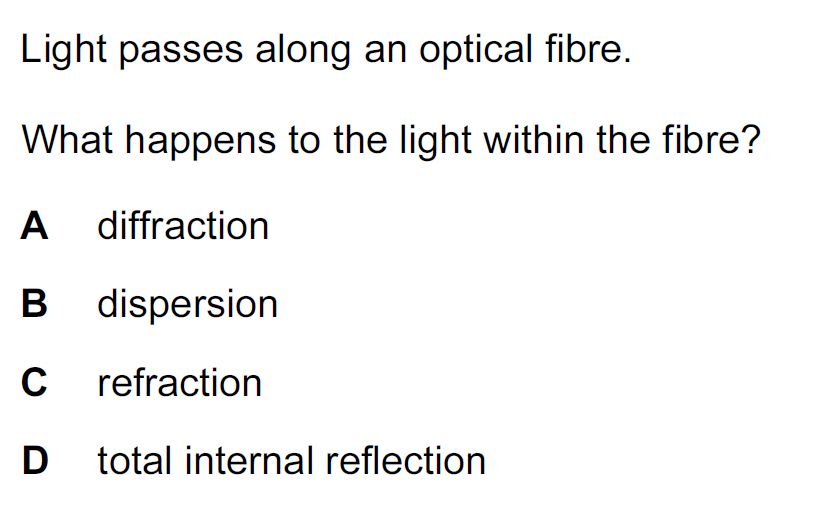
Answer : D
Solution
The light is confined within an optical fibre, so as to lead to minimal attenuation because of the phenomena of total internal reflection.
4.
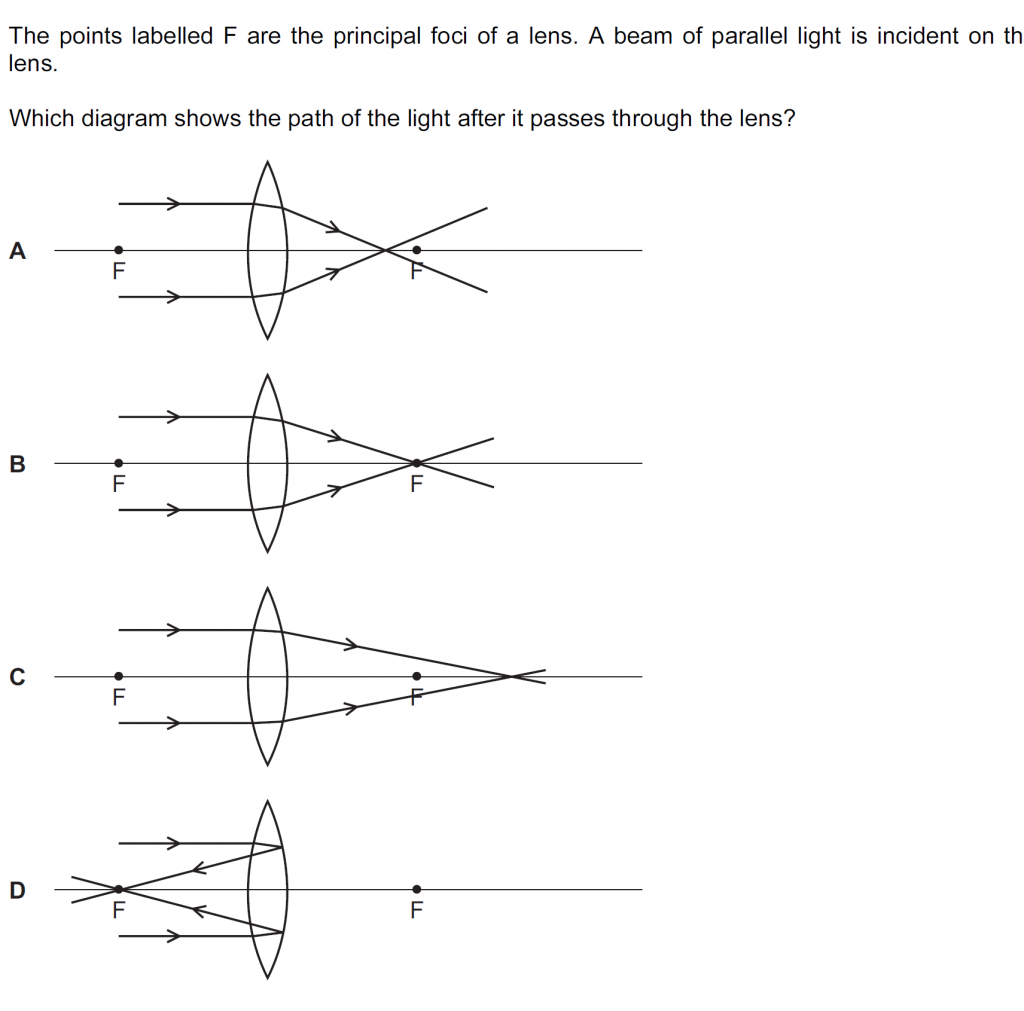
Answer : B
Solution
Rays parallel to the principal axis on passing through a converging lens, like above, pass through the focus.
5.
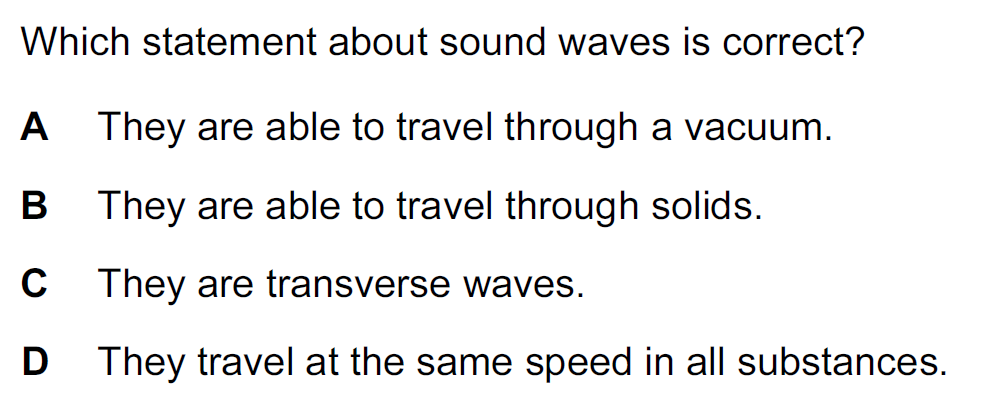
Answer : B
Solution
They can travel through solids. They basically need a medium to pass through.
6.
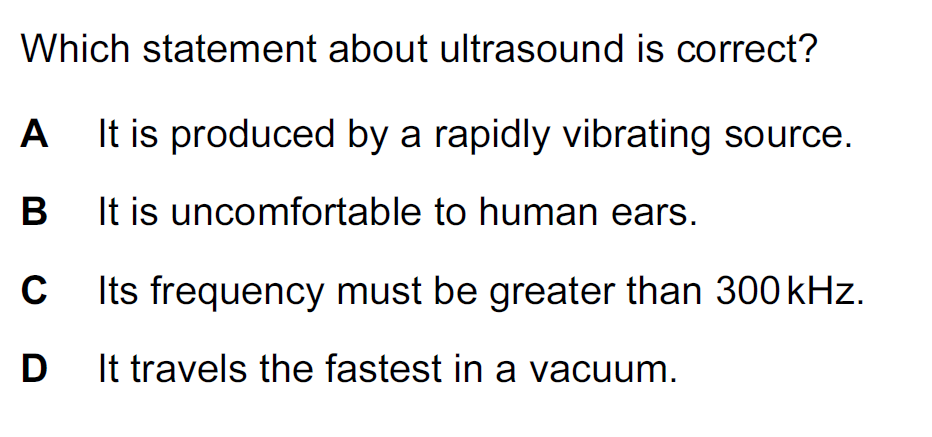
Answer : A
Solution
Ultrasound waves are sound waves of a very high frequency, produced by a rapidly vibrating source.
7.
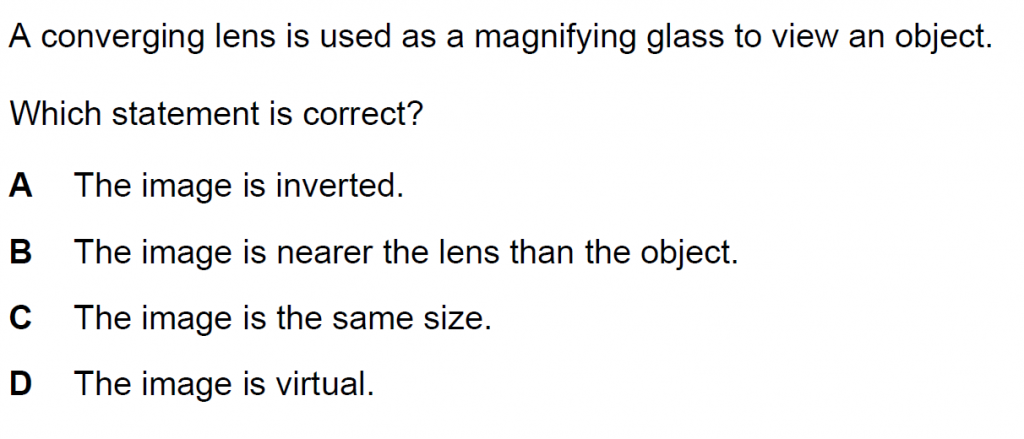
Answer : B
Solution
The greatest spreading or diffraction takes place of the waves passing through a gap of dimension comparable to the wavelength of the incident wave, so B.
8.
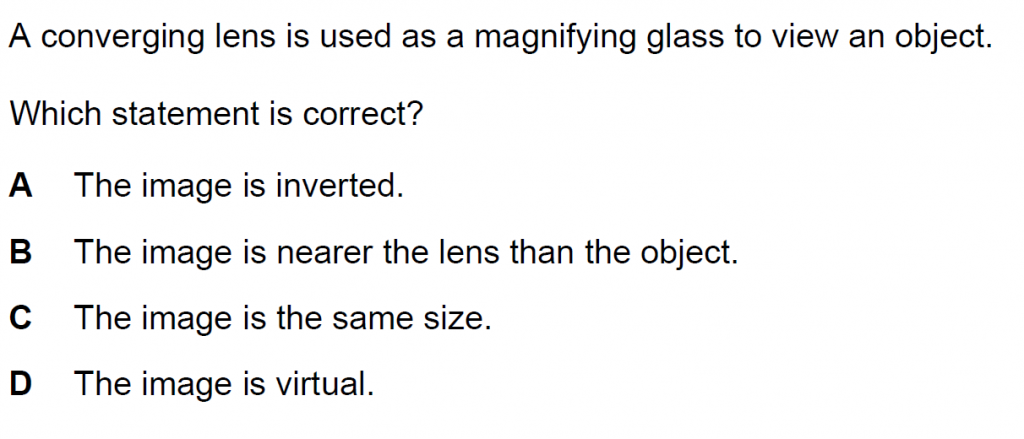
Answer : D
Solution
The image produced by a converging lens when used as a magnifying glass is produced on the same side as the object and is virtual.
9.

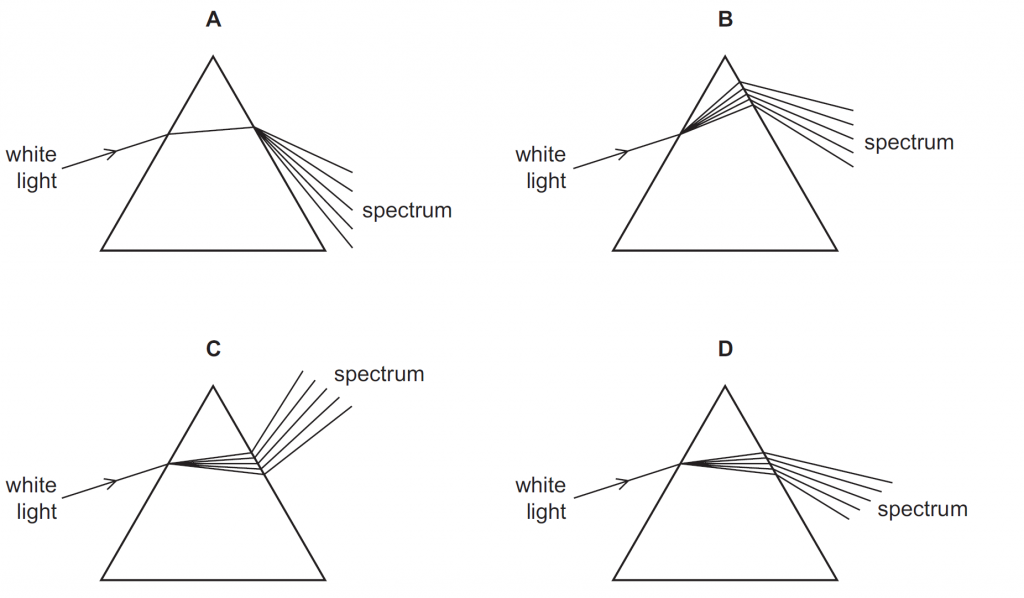
Answer : D
Solution
Because the speeds of light rays of different wavelengths is different in a medium other than vacuum, they bend by different amounts, and disperse.
10.
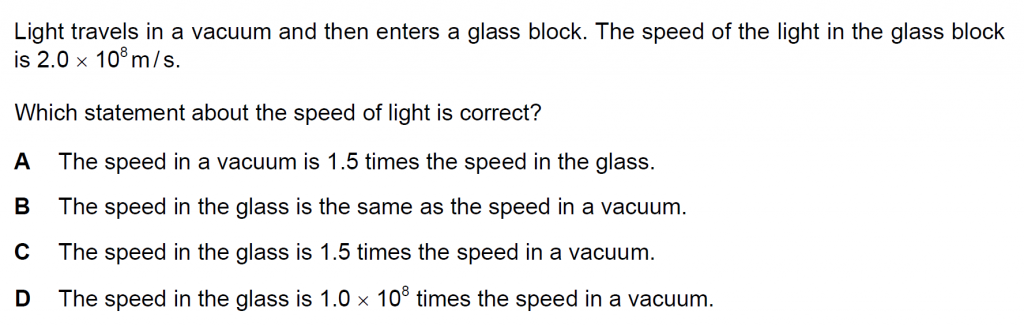
Answer : A
Solution
Speed of light in vacuum is 3 x 10⁸ m/s, which is 1.5 x 2.0 x 108 m/s = 3.0 x 10⁸ m/s.
Thus, 1.5 times the speed in glass, so
11.
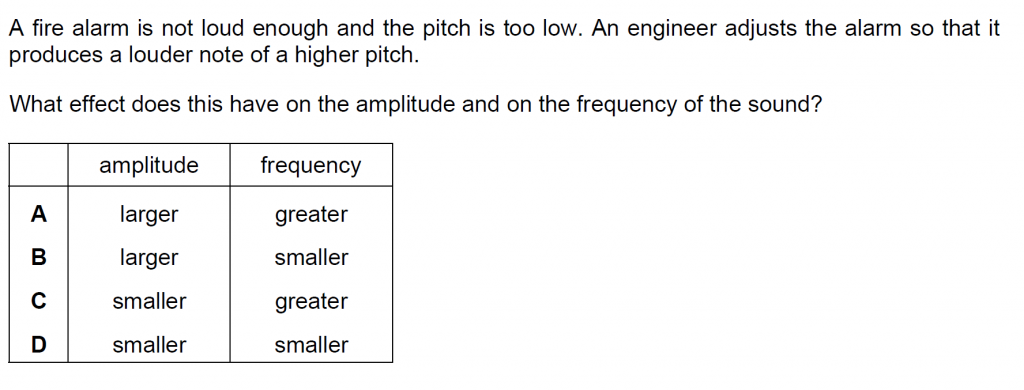
Answer : A
Solution
Loudness is proportional to amplitude, so a louder note is of a larger amplitude.
Pitch is proportional to frequency, so a higher pitch note is of a greater frequency.
12.
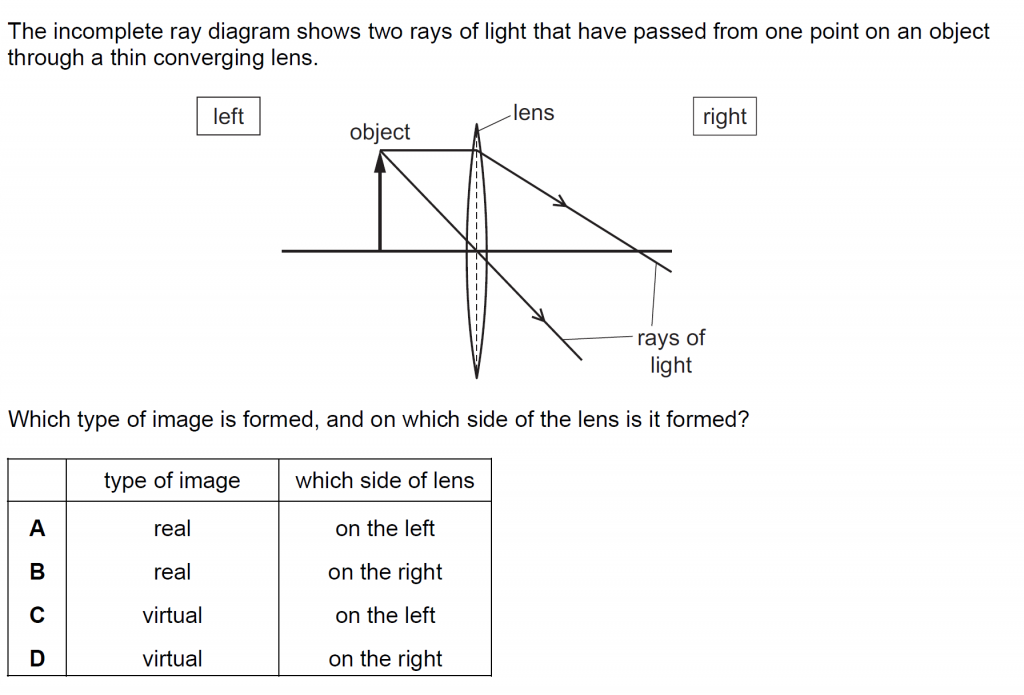
Answer : C
Solution
As the rays diverge after passing through a lens, they will never meet, and will seem to come from a point behind the lens, thus producing a virtual image on the left of the lens.
13.
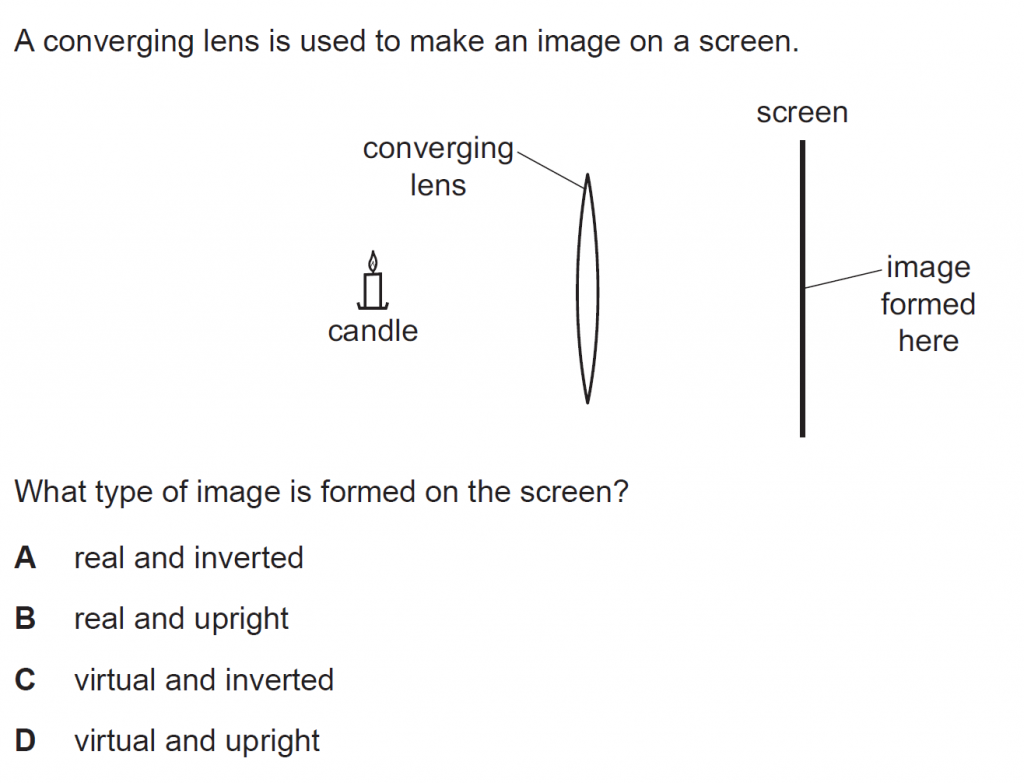
Answer : A
Solution
The rays from the candle will converge and meet on the screen, thus producing a real and inverted image.
14.
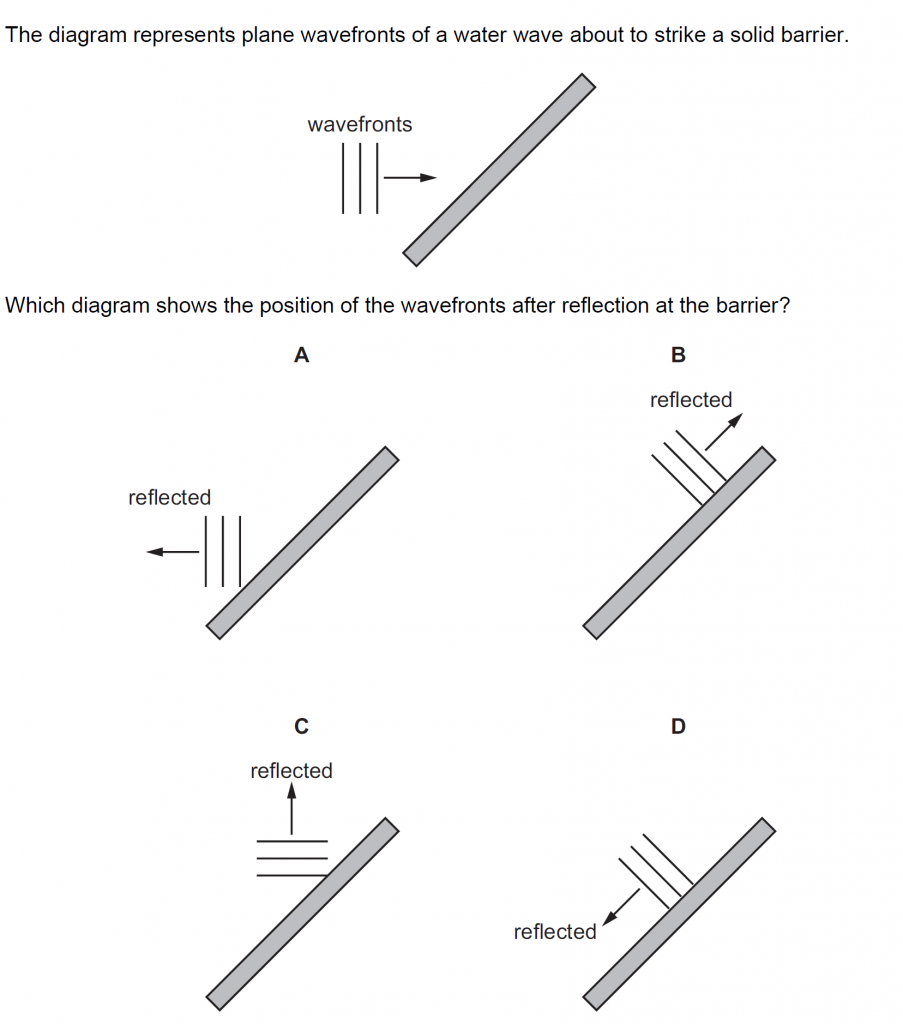
Answer : C
Solution
After reflection the wavefronts will make an equal angle with the solid barrier, as on being incident, so
15.
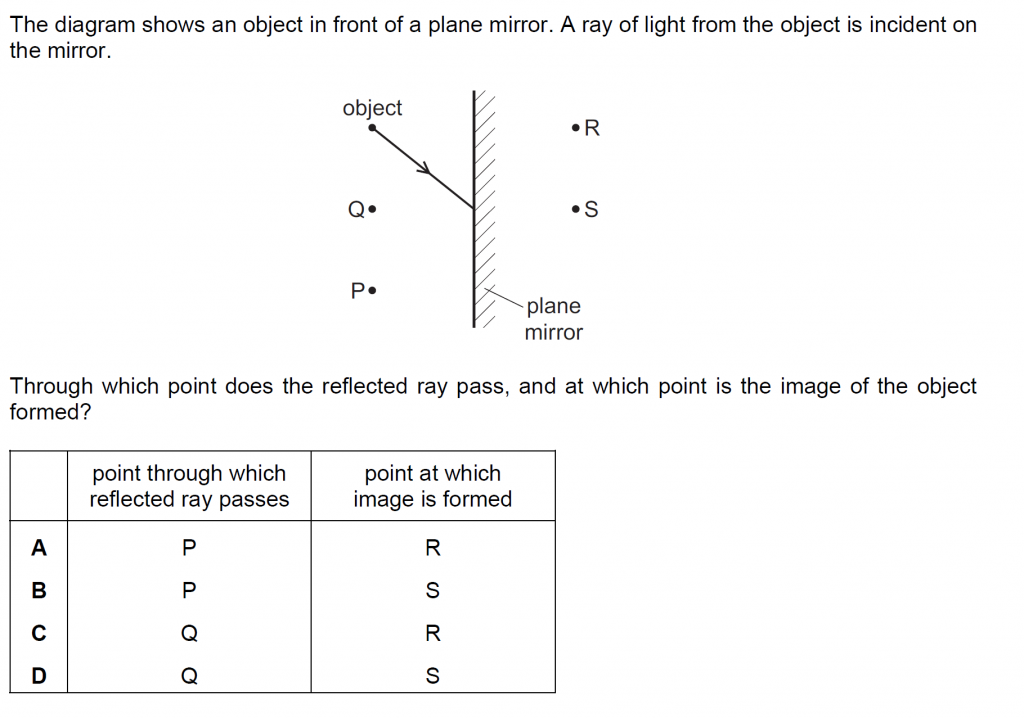
Answer : A
Solution
Reflected ray will pass through P, as the angle of reflection = angle of incidence, and the image will be formed at R, equidistant from the mirror as the object is.