Distance:
- Length of the actual path covered
- It is a scalar quantity
- SI unit is meter
Speed:
- It is the rate of change of distance
- It is a scalar quantity
}&space;=&space;\frac{\textup{Distance&space;(S)}}{\textup{Time&space;(t)}})
- SI unit is m/s
Average Speed:
- It is the average speed over a time interval
}&space;=&space;\frac{\textup{Total&space;Distance&space;(d)}}{\textup{Total&space;time(t)}})
}&space;=&space;\frac{u+v}{2})
- u is the initial speed
- v is the final speed
Displacement and Velocity
Displacement
- Length of the shortest path between two points
- It is a vector quantity
- SI unit is meter m.
Velocity
- It is the rate of change of displacement
- It is a vector quantity
}&space;=&space;\frac{Displacement&space;(s)}{Time&space;(t)})
- SI unit is m/s
Average Velocity
- It is the average velocity over a time interval
}&space;=&space;\frac{&space;\textup{Total&space;Displacement&space;(s)}}{\textup{Total&space;Time&space;(t)}})
}&space;=&space;\frac{u+v}{2})
- u is the initial velocity
- v is the final velocity
Acceleration:
- The rate of change of velocity is called acceleration
- It is a vector quantity

- u is the initial velocity
- v is the final velocity
- SI unit of is m/s² or N/kg
Constant Acceleration

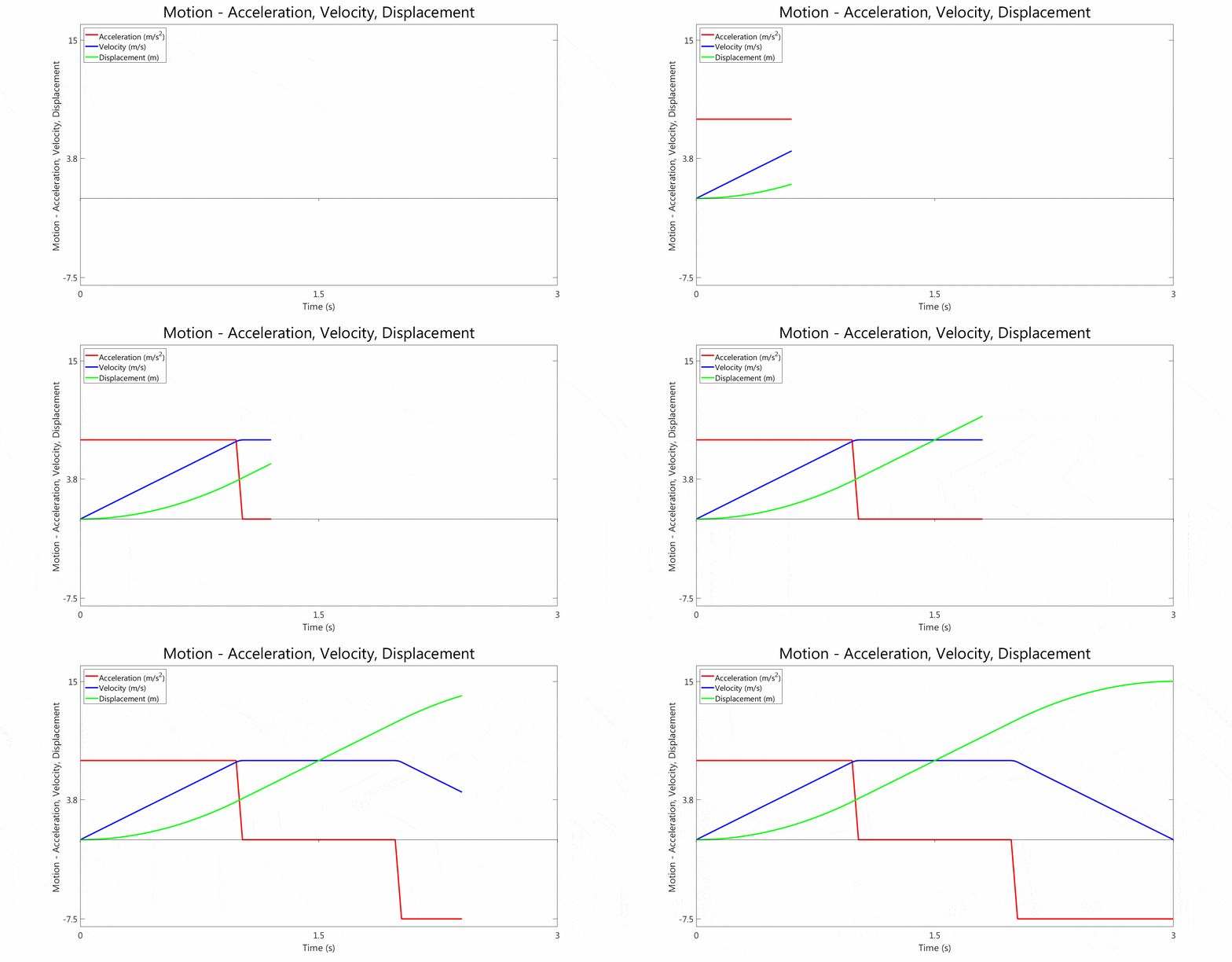
- Phase 1: Constant Positive Acceleration
- Velocity increases linearly with time:
 gradient of the distance-time graph
 gradient of the speed-time graph
- Displacement increases with time squared:
- Area under the velocity-time graph is the displacement
- Area under the speed-time graph is distance
- Example: Freefall under the influence of gravity
- Phase 2: Constant Zero Acceleration
- Velocity remains constant with time:
- Displacement increases linearly with time:
- Phase 3: Constant Negative Acceleration (Constant Deceleration)
- Velocity decreases linearly:
- Displacement increases with negative of time squared:
- This is equivalent to that of a body in freefall under the effect of gravity without air resistance
Changing Acceleration
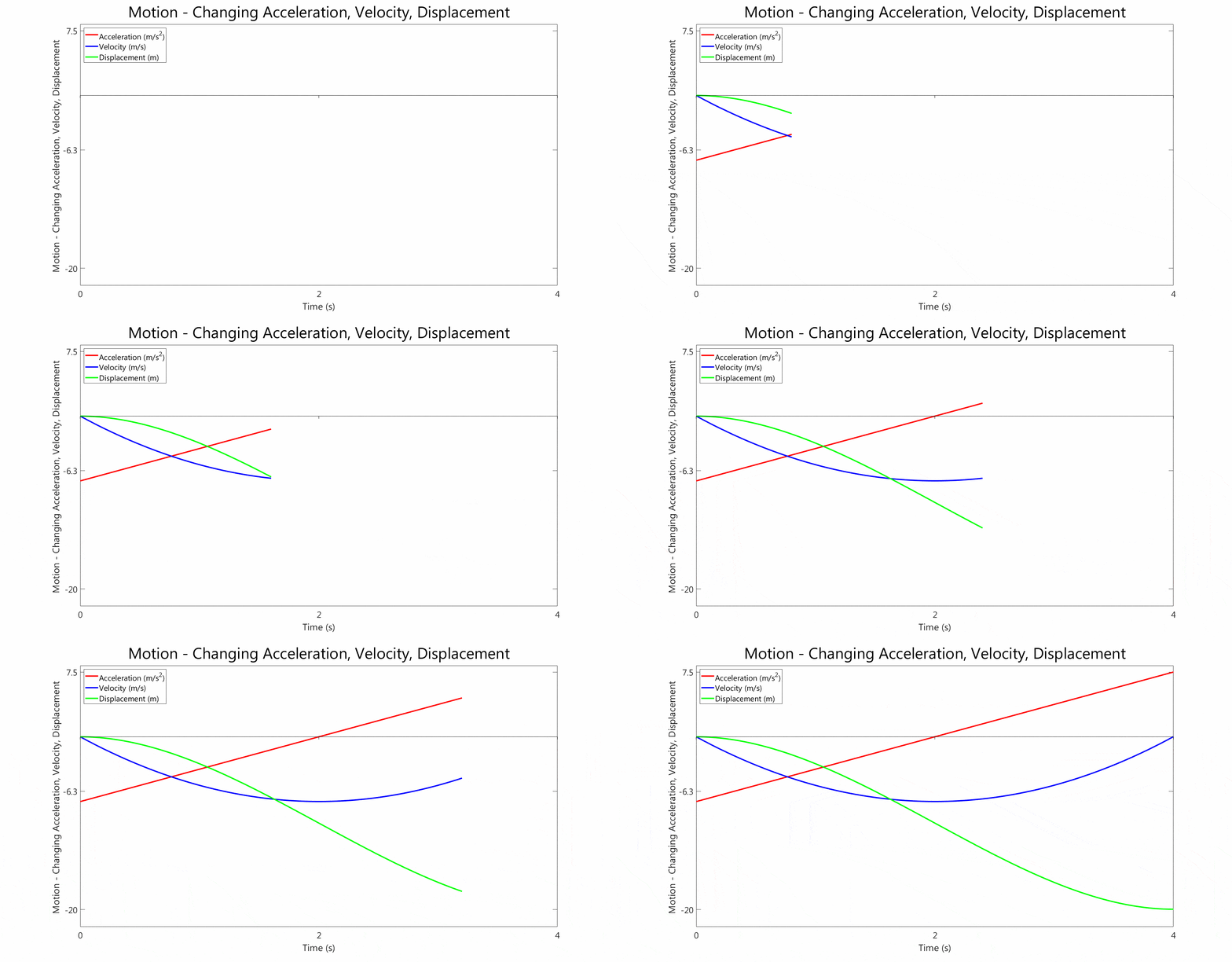
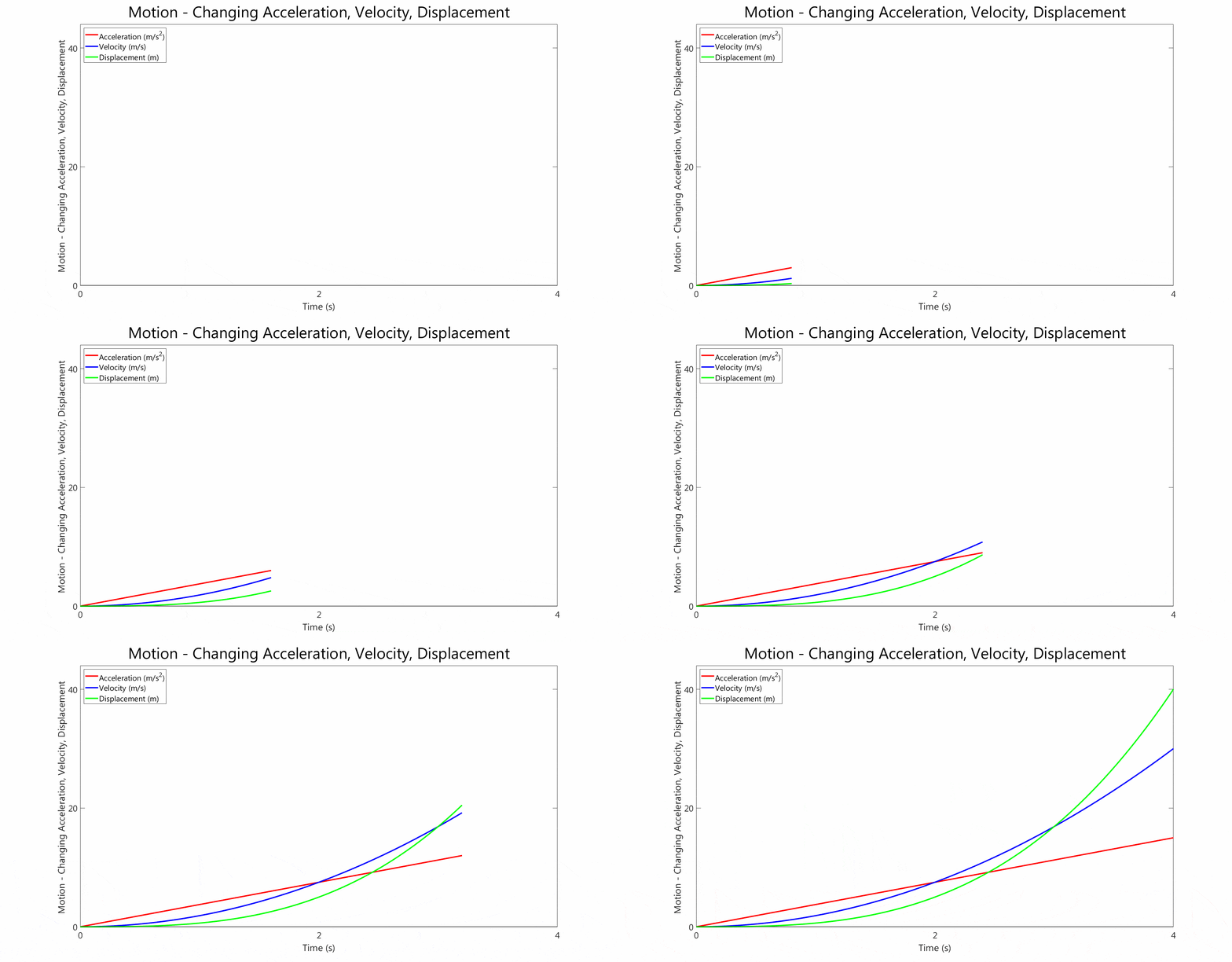
- Both graphs show non-constant acceleration.
- The acceleration changes linearly with time in both cases
- In the first graph, the acceleration is initially negative, i.e. the body is under deceleration, and linearly increases. Halfway through it crosses 0 and changes to positive, and the body starts accelerating.
- The velocity follows a quadratic curve,
- The displacement curve is even steeper than the velocity curve
- In the second graph, the acceleration starts from 0 and linearly increases.
- The velocity follows a quadratic curve,
- The displacement is even steeper than the velocity curve