Momentum and Impulse
Momentum
- It is the product of mass and velocity of an object
- It is a vector quantity

- SI unit is
 or
or 
Impulse
- Impulse is the product of force and the time for which it acts.
- It is a vector quantity

- SI unit is
- From

- Thus, impulse is the change in momentum.
Law of Conservation of Momentum
- The total momentum of an isolated system remains constant.
- Isolated System – Net External Force =



 are the masses of the two bodies in the system
 are their initial velocities
 are their final velocities
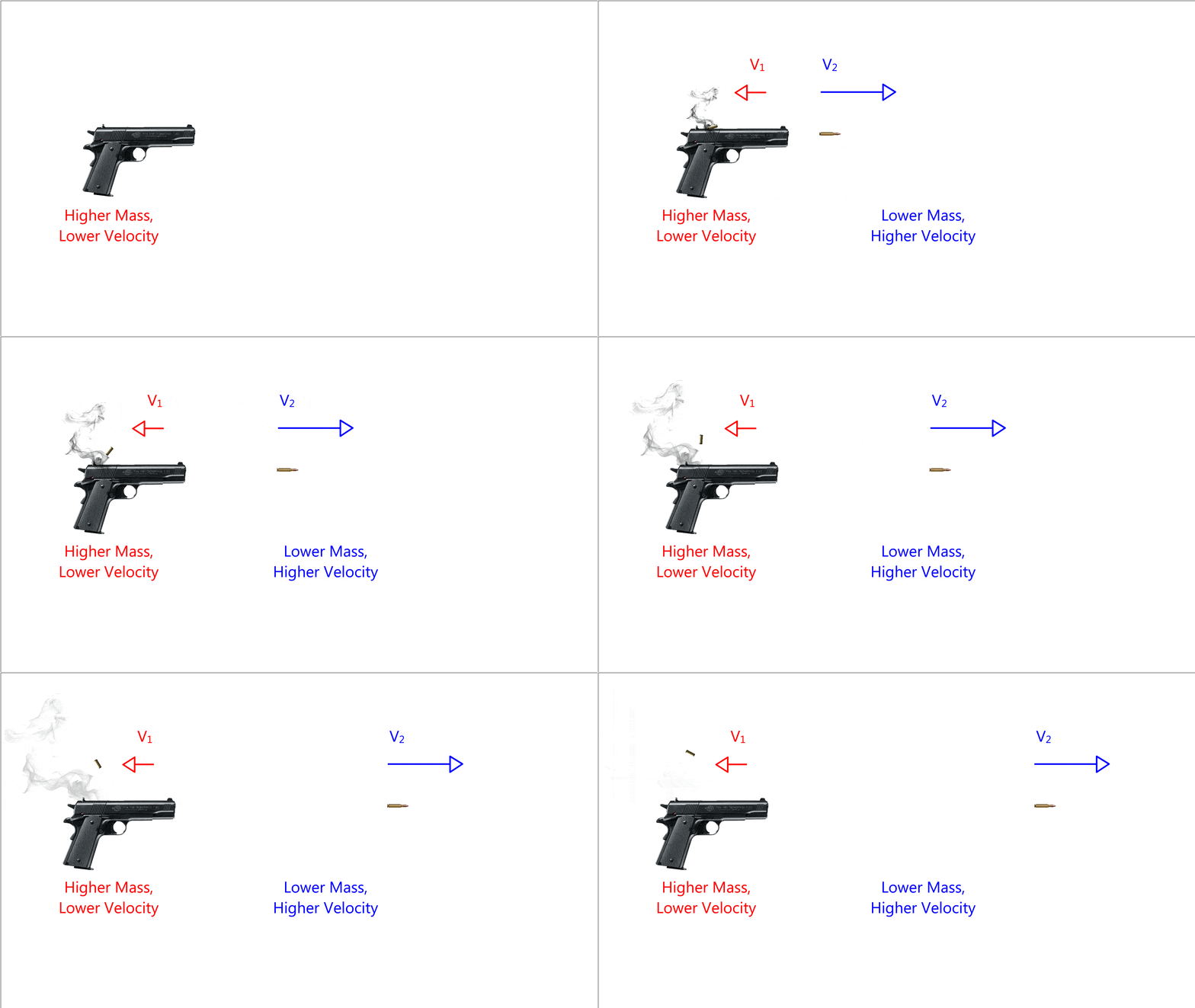
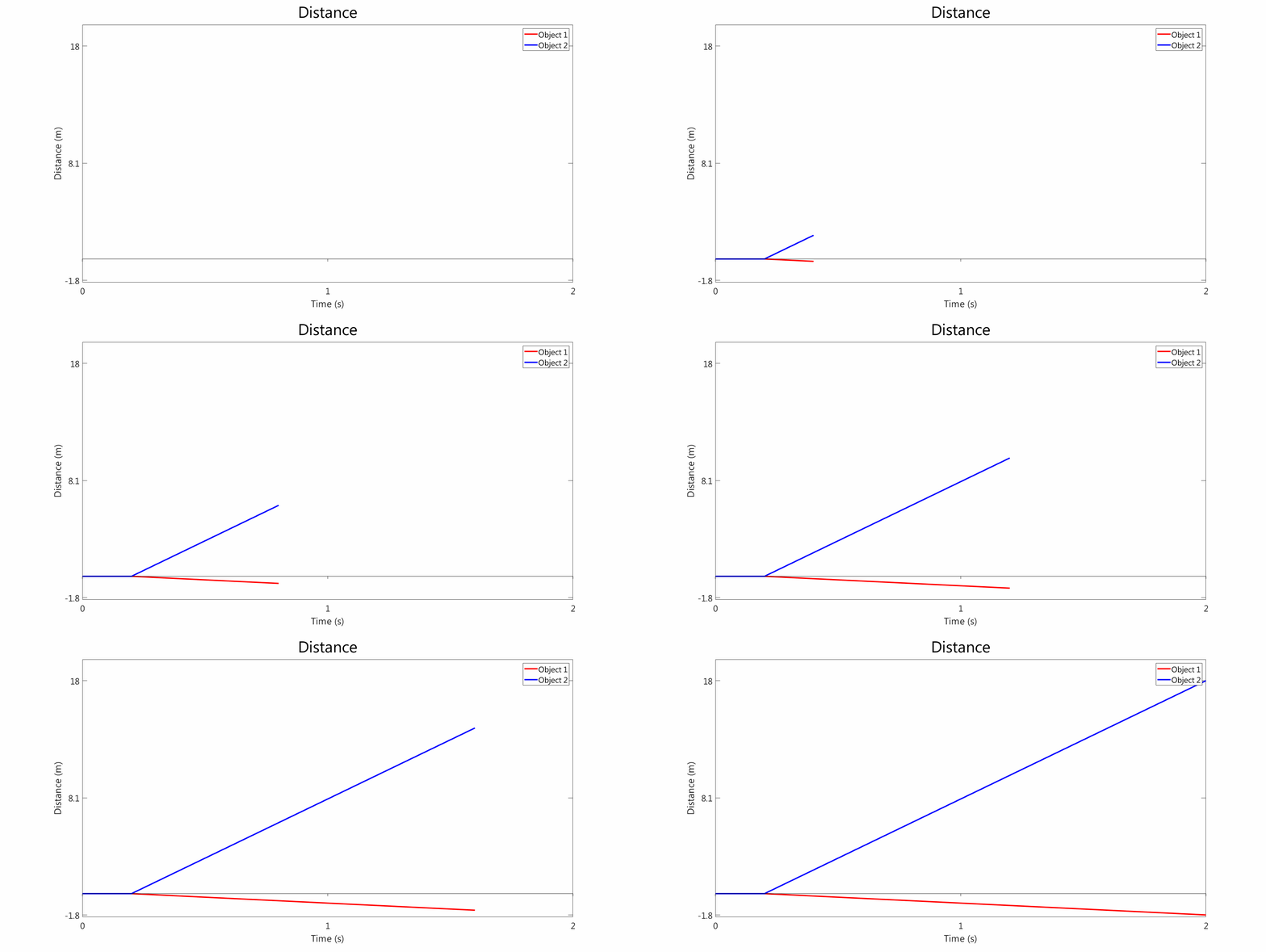
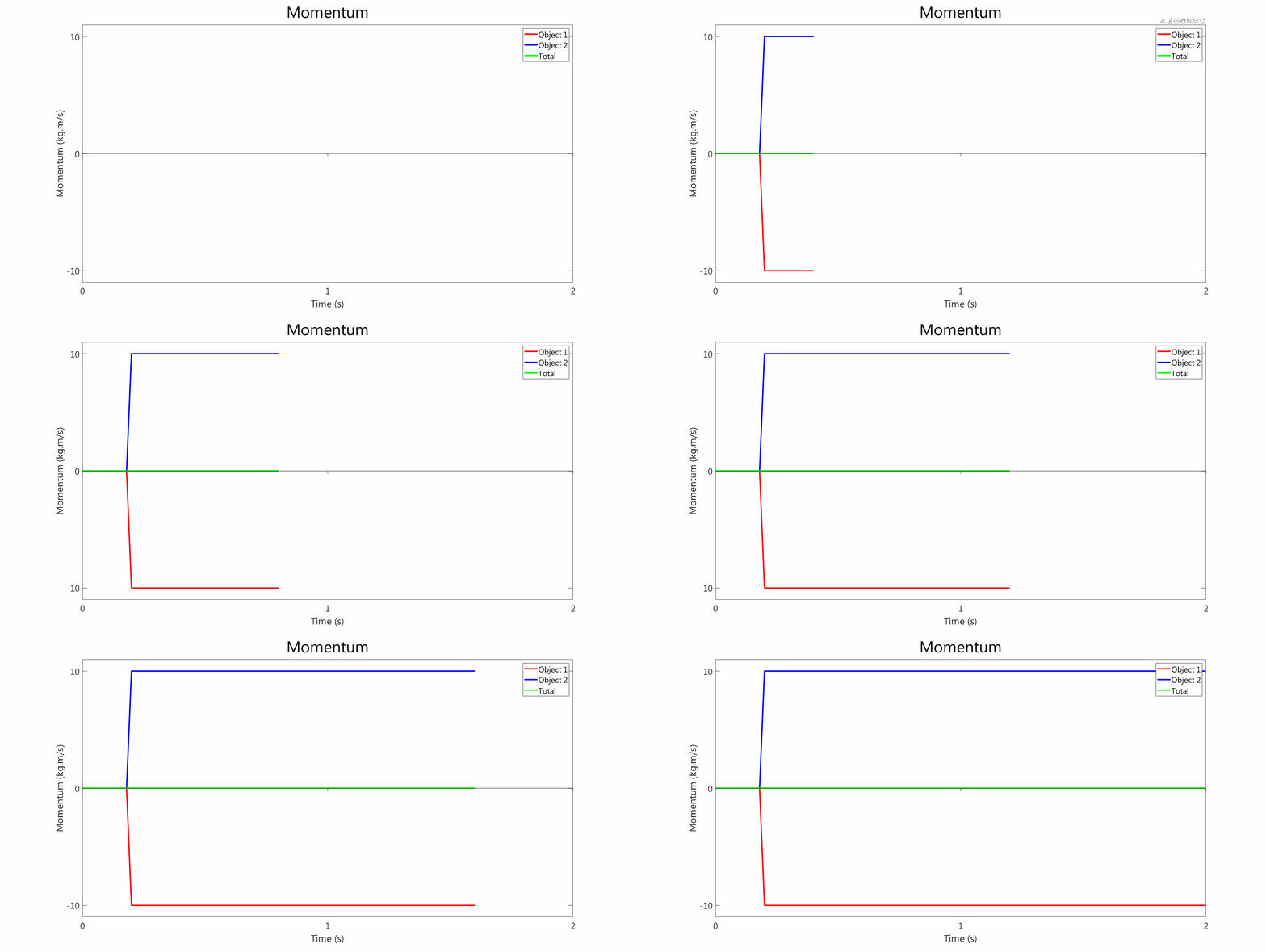
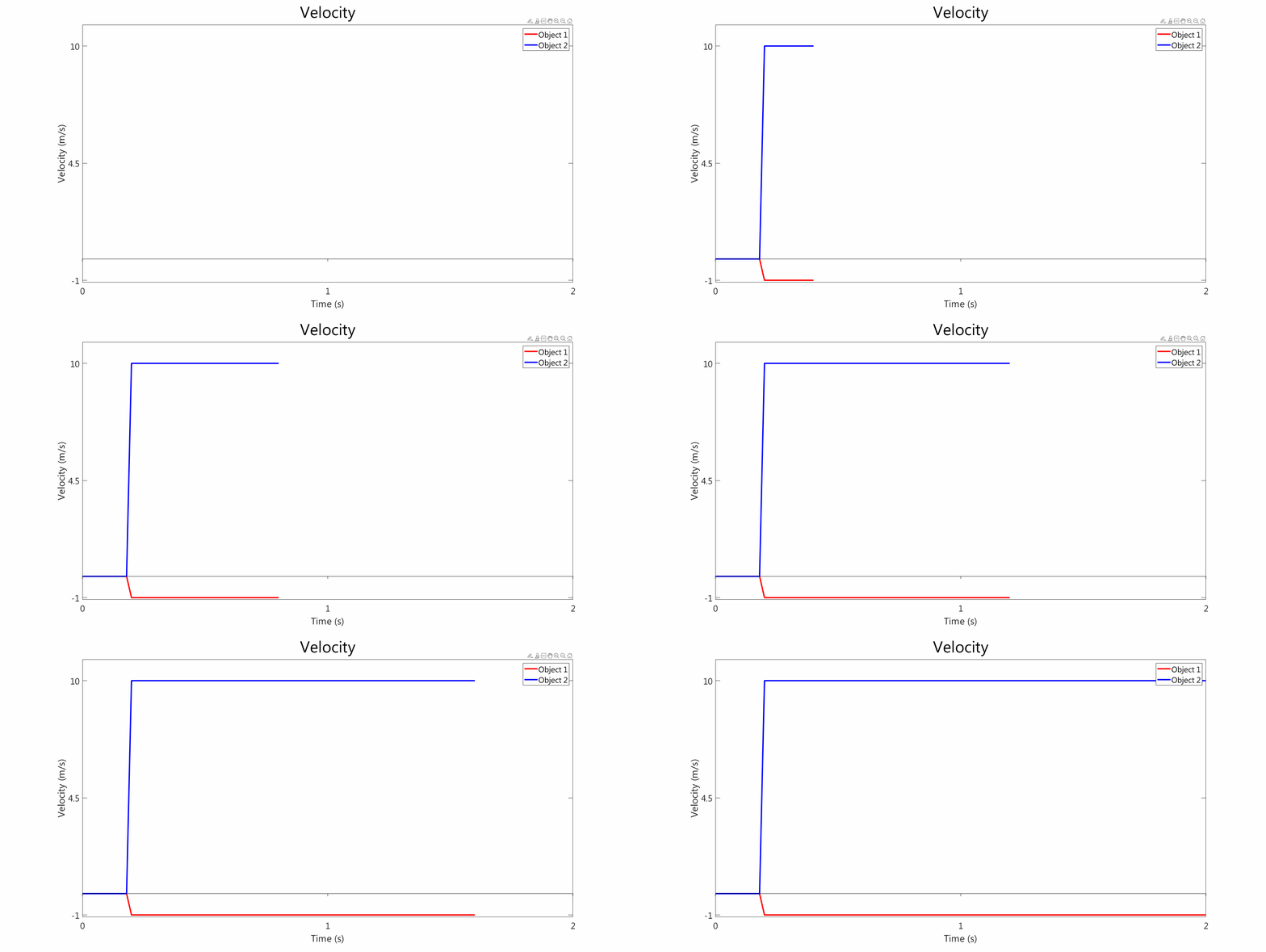
- Example: Gun firing a bullet
- Before the Gun fires the bullet, the net momentum of the system is 0.
- After the gun fires,
- the bullet travels to the right,
- the recoil from the gunshot pushes the gun to the left.
- The total momentum of the system remains 0,
- The velocity of the gun, which has a much larger mass, is low
- The velocity of the bullet, which has a much smaller mass, is high
Momentum and Impulse Application
Example: Ball hits the wall and rebounds
- Initially, the striking cue imparts momentum to the cue-ball (M1)
- The cue ball (
 ) collides (1) with the stationary red ball (
 )
)
- The cue ball comes to a rest (
 ), while the stationary red ball (
 ) moves towards the wall
- The red ball collides (2) with the wall (
 ) and rebounds at a lower speed (
 )
)
Practice Question: Given –



- Calculate the Force acting on the ball as it rebounds off the wall.
Solution:
Assuming Left is Positive
- Governing equation of conservation of momentum:
- First collision:

+0.2&space;(0)=0.2(0)+0.2(v_\textup{2,1}))

- Note: When objects of the same mass collide, and one of them was stationary, then the moving object comes to a complete rest while the stationary object gains all the velocity of the moving object.
- Second collision:
- Here, conservation of momentum does not apply:
- This is because there is a net force acting on the system: Impulse from the rebound
- Calculating Force from Impulse:
}{t_\textup{rebound}})
}{0.02})

- The Force is Negative: this means that the force is acting opposite to the originally assumed positive direction.
- Assumption: Left is positive
- Thus, the force is of magnitude
 and acting to the Right
- This makes sense, since in order to change the direction of the ball to the right, the Force has to act towards the right.